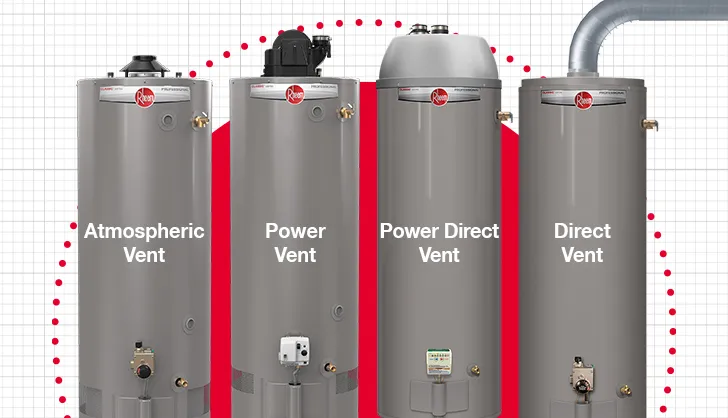
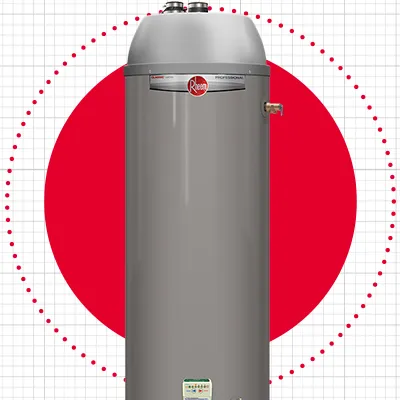
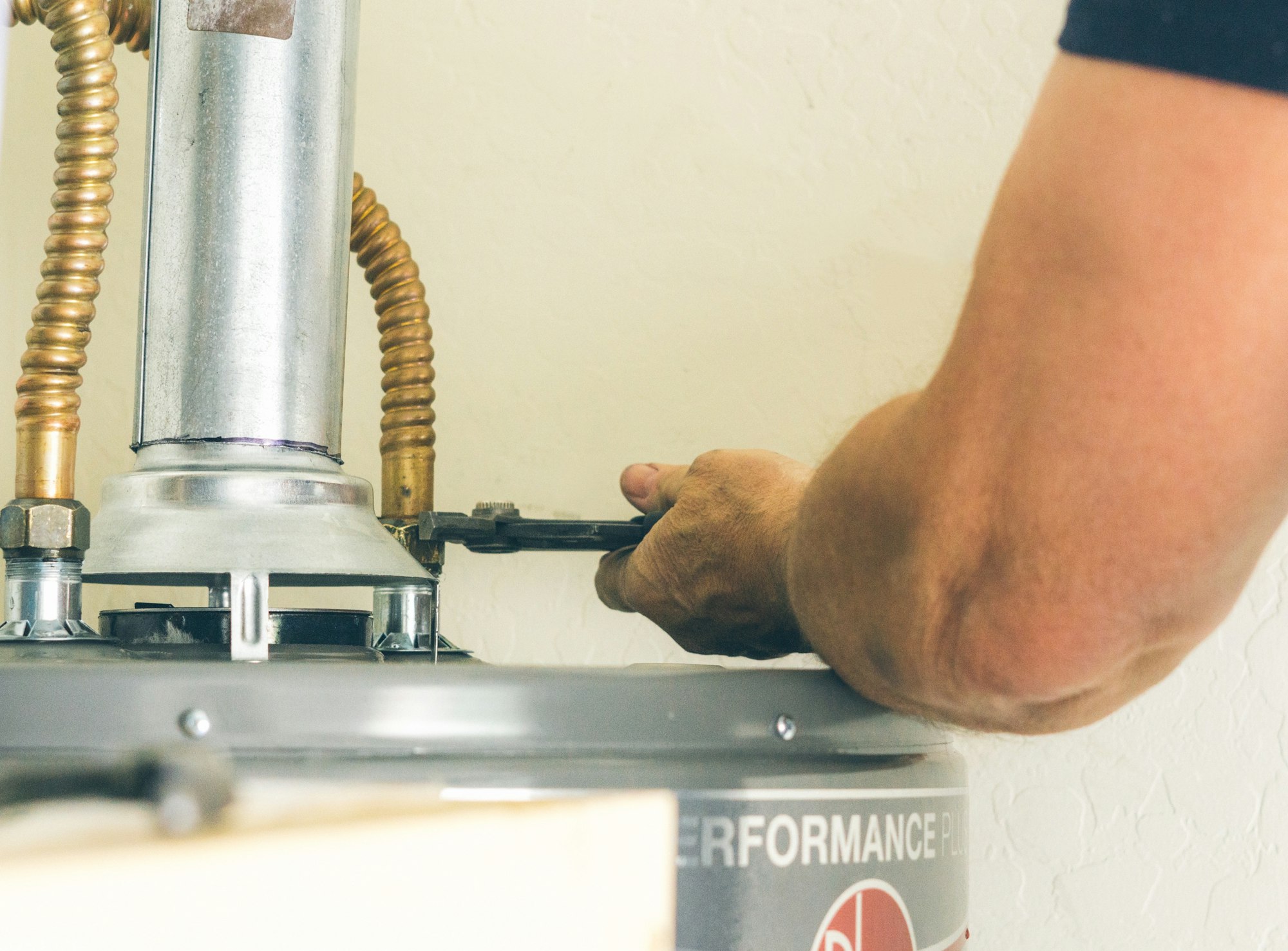
Atmospheric, power vent, direct vent, power direct vent. They all heat water with gas. The difference is how they breathe. Here’s what each one means for your Denver-area home, in plain English.
Open every day 8am–8pm · Upfront pricing · Family-owned in Centennial since 2004
4Gas venting types
2004Serving Denver metro since
7 Days8am–8pm, every day
Tank & TanklessInstalled & serviced
Start here
Why the venting type matters
Most gas water heaters look about the same sitting in the basement. What separates them is how they pull in air to burn gas and how they send the exhaust outside. That one detail decides where the unit can go, whether it needs an outlet, and how easy a replacement will be.
When your old tank gives out, the type you already have (and the vent pipe running out of it) usually points to the simplest swap. Sometimes a different type is the better move, like when there’s no chimney to use or the home is sealed up tight.
Our office sends customers to Rheem’s guide on this topic all the time, so we put together our own version with the Colorado homeowner in mind.
The four types
Atmospheric, power vent, direct vent & power direct vent
Most common
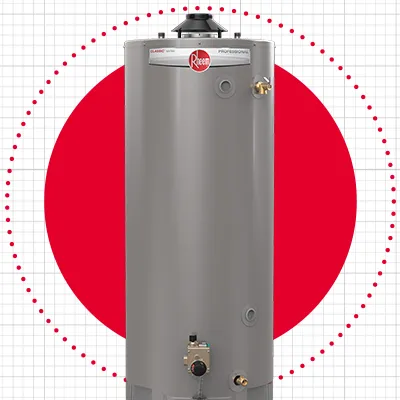
Atmospheric Vent
The classic. Hot exhaust rises on its own through a vertical vent or chimney, the same way warm air rises. There’s no fan doing the work.
Vents
Straight up through a vertical flue or chimney
Power
No electricity needed for venting
Best for
Homes that already have a working chimney or metal vent, simple like-for-like replacements, keeping upfront cost down
Keep in mind
Needs enough indoor air to burn properly, must vent vertically, and your layout can limit where it goes
No chimney? No problem
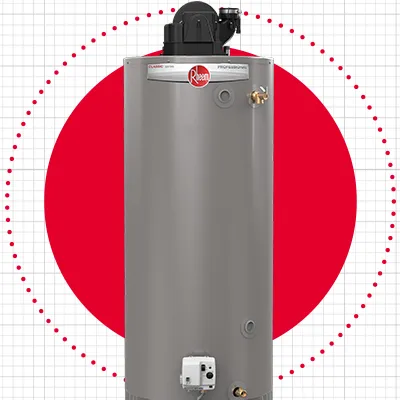
Power Vent
An electric blower pushes the exhaust out through a vent pipe, so it doesn’t have to rely on hot air rising.
Vents
Usually sideways through an exterior wall
Power
Needs electricity to run the blower
Best for
Basements and utility rooms with no vertical vent, homes that need flexible vent routing, replacing an atmospheric unit when venting is a headache
Keep in mind
Typically costs more than atmospheric, and you may hear the fan run
Sealed combustion
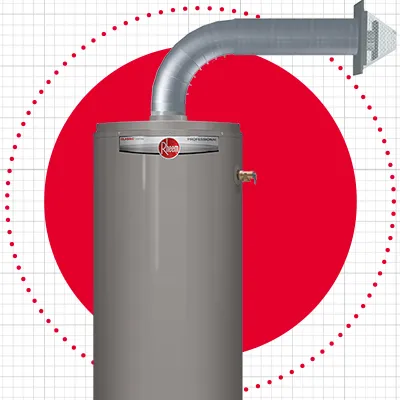
Direct Vent
A sealed system. It pulls combustion air in from outside and sends exhaust straight back out through its own vent assembly, so it never borrows air from inside your home.
Vents
Through an exterior wall or approved vent path
Air
Outdoor air in, exhaust out
Best for
Tightly built homes, rooms where indoor combustion air is limited, homeowners who want more placement options
Keep in mind
Needs an exterior wall or approved vent path, and install requirements vary by model
Most flexible
Power Direct Vent
The best of both. Sealed combustion like a direct vent, plus a blower that moves both the incoming air and the exhaust.
Vents
Longer runs than many standard direct vent units
Power
Needs electricity for the blower
Best for
Complicated installs, homes with limited venting options, anyone who prefers sealed combustion
Keep in mind
Offers the most installation flexibility of the four
It mostly comes down to how your home can vent, how much room you have, and what the install requires.
Already have a working chimney or metal flue? An atmospheric unit is often the simplest replacement.
No vertical vent, or the tank lives in a basement or utility room? A power vent model can usually vent out a side wall instead.
Newer, tightly sealed home or a small closet install? Direct vent keeps combustion air sealed off from your living space.
Long or awkward vent run? Power direct vent gives you the most flexibility.
Gas lines, venting, and clearances all have to be done right, so have a qualified pro look at your setup before you buy. That’s what we’re here for.
FAQ
Gas water heater questions we hear a lot
What’s the most common type of gas water heater?
Atmospheric vent. It uses natural draft to send exhaust up a vertical vent or chimney, needs no electricity for venting, and is usually the simplest and least expensive option.
Can I replace an atmospheric water heater with a power vent?
Often, yes. Power vent units are a common choice when venting an atmospheric unit is difficult, because the blower can usually send exhaust out through an exterior wall instead of a chimney.
Do power vent water heaters need electricity?
Yes. The blower runs on electricity, so the unit needs an outlet or electrical connection. Power vent models also tend to cost more than atmospheric ones, and you may hear the fan.
What’s the difference between direct vent and power direct vent?
Both are sealed combustion: they pull air from outside and vent exhaust outside. Power direct vent adds a blower that moves both, which lets it handle longer vent runs and trickier installs.
Does Hytek install and repair gas water heaters?
Yes. We install, replace, and service tank and tankless water heaters across the Denver metro. Call (303) 627-3395, any day 8am–8pm, or see our water heater services.
Give us a call. We’ll help you figure out what’s in your basement and what makes sense to replace it with, with the price up front before any work starts.
To provide the best experiences, we use technologies like cookies to store and/or access device information. Consenting to these technologies will allow us to process data such as browsing behavior or unique IDs on this site. Not consenting or withdrawing consent, may adversely affect certain features and functions.
Functional
Always active
The technical storage or access is strictly necessary for the legitimate purpose of enabling the use of a specific service explicitly requested by the subscriber or user, or for the sole purpose of carrying out the transmission of a communication over an electronic communications network.
Preferences
The technical storage or access is necessary for the legitimate purpose of storing preferences that are not requested by the subscriber or user.
Statistics
The technical storage or access that is used exclusively for statistical purposes.The technical storage or access that is used exclusively for anonymous statistical purposes. Without a subpoena, voluntary compliance on the part of your Internet Service Provider, or additional records from a third party, information stored or retrieved for this purpose alone cannot usually be used to identify you.
Marketing
The technical storage or access is required to create user profiles to send advertising, or to track the user on a website or across several websites for similar marketing purposes.
New customers: get your furnace cleaned and checked for before the first cold snap. When it gets cold, everybody calls at once. Grab a spot now while the schedule is open.
var complianz = {"prefix":"cmplz_","debug":"","user_banner_id":"1","set_cookies":[],"block_ajax_content":"","banner_version":"10","version":"7.5.6","store_consent":"","do_not_track_enabled":"1","consenttype":"optin","region":"eu","geoip":"","dismiss_timeout":"","disable_cookiebanner":"","soft_cookiewall":"","dismiss_on_scroll":"","cookie_expiry":"365","url":"https://hytekairsystems.com/wp-json/complianz/v1/","locale":"lang=en&locale=en_US","set_cookies_on_root":"","cookie_domain":"","current_policy_id":"30","cookie_path":"/","categories":{"statistics":"statistics","marketing":"marketing"},"tcf_active":"","placeholdertext":"Click to accept {category} cookies and enable this content","css_file":"https://hytekairsystems.com/wp-content/uploads/complianz/css/banner-{banner_id}-{type}.css?v=10","page_links":{"eu":{"cookie-statement":{"title":"Cookie Policy ","url":"https://hytekairsystems.com/cookie-policy-eu/"}}},"tm_categories":"","forceEnableStats":"","preview":"","clean_cookies":"","aria_label":"Click to accept {category} cookies and enable this content","iapi_nav":"fallback","is_cookiepolicy_page":""};
//# sourceURL=cmplz-cookiebanner-js-extra